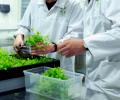
Several leading scientists, academicians, and agriculturalists have called for raising government support for research and development to make Indian agriculture future-ready.

'...I'll say this to my fellow Americans, the more ties that we have to more Indians and the more ways we can find to grow our economic and educational exchanges, the stronger America and India.'
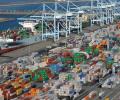
The Federation of Indian Export Organisations (FIEO), the apex body for exporters, is formulating a strategy for five key sectors to boost exports to the United States (US), as President-elect Donald Trump has threatened to impose high tariffs on Chinese goods. "This time, we need to be proactive instead of reactive.
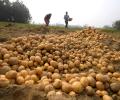
Amid the political blame game over Bengal's potato ban, which led to shortages in Jharkhand and Odisha, Uttar Pradesh farmers are the unlikely winners.

The cold wave days in December too are expected to be 'below-normal' this year.

As the Union government explores ways to restrict import of laptops and other electronic devices starting with a 5 per cent reduction from the current level, it is working to ensure that there's no supply disruption in India even if an import cap is introduced, it is learnt. The caveat assumes significance in the context of the government's announcement of its plan in August 2023 to issue licences for import of select IT hardware products to reduce the country's dependence on China.

A fresh survey to identify a minimum of eight million new beneficiaries of the flagship rural housing scheme, in addition to the 12 million already identified, will use the latest face-recognition tools to minimise gaps, a senior official said on Tuesday. The survey, which has already started across the country for building the fresh 20 million new rural houses over the next five years, can also be done by the beneficiary himself/herself as well through the Awaassoft mobile application specially created for this purpose.

'We may see even more restrictive policies during 2.0.'
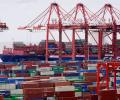
Exports to eight out of India's top 10 destinations, including the Netherlands, the United States (US) and the United Kingdom (UK), witnessed positive growth during the first six months of FY25, despite muted global demand amid geopolitical challenges, commerce department data showed.
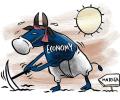
Fewer people participated in MGNREGA during the first six months of this financial year (April-September) compared to the same period last year, a recent analysis of the scheme's performance by LibTech showed.
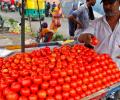
Tomato prices have been on the boil for more than a month. Data from major cities show that the spike has been between 125 and 150 per cent at the wholesale level. Soaring vegetable prices, including tomatoes, pushed the retail inflation rate to a nine-month high of 5.49 per cent in September, according to government data. Though reports say prices are expected to come down in the next few weeks after supplies improve from Madhya Pradesh and Himachal Pradesh, how long will the respite last is anybody's guess.

Four big global companies - Bayer, GenZero (a wholly-owned arm of financial major Temasek), Shell and Mitsubishi - have decided to scale up their carbon credit programme in nine states to empower farmers. The credits are generated through the adoption of smart agriculture practices - Alternate Wetting and Drying (AWD) and Direct Seeded Rice (DSR). Since over a year, the project, which was being run on a pilot basis, has positively impacted 10,000 farmers, covering more than 25,000 hectares.

The United Arab Emirates (UAE) has agreed to look into India's concerns over compliance to rules related to the import of silver products, platinum alloy and dry dates, the commerce department said on Tuesday. During a joint committee meeting under the India-UAE trade deal, officials from New Delhi raised concerns over the recent surge in imports of these products. These were being shipped to India, taking advantage of the lower tariffs under the pact.

India has reduced the time period for foreign investors to seek international arbitration from five years to three years as part of the recently signed investment pact with the United Arab Emirates (UAE), a departure from its model Bilateral Investment Treaty (BIT). Under the Investor-State Dispute Settlement (ISDS) mechanism, if the Indian judicial system is unable to resolve a dispute within this shortened period, investors can resort to international arbitration. The investment pact, signed on February 13 in Abu Dhabi, came into force on August 31, replacing the previous pact.

India stares at the risk of an influx of Chinese products as US tariffs on a range of Chinese goods, including solar panels, electric vehicles, lithium-ion batteries, syringes, and steel, are set to take effect from September 27. With higher tariffs reducing China's access to the US market, there is concern that China may divert its exports to other markets, including India, which could lead to potential dumping of goods. This situation could challenge Indian industries, particularly in sectors where competition with Chinese products is already fierce.
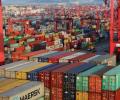
Concerned over the fallout of the Red Sea crisis and severe shortage of containers against the backdrop of a steep decline in merchandise exports in August, the Union government is pulling out all the stops to find a solution. To begin with, the government has devised a strategy aimed at boosting container supply and supporting exporters.

'We can hope to see a lot of creation of jobs in the days to come.'
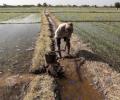
Gross Value Added (GVA) growth in agriculture and allied activities in the first quarter of the 2024-25 financial year (Q1FY25) dipped to 2.7 per cent at constant prices from 4.2 per cent in Q1FY24 due to a drop in output of some crops following heatwave in the main growing months. Low post-monsoon rains, which dried most of the reservoirs in several states across the country, also impacted the production of many crops. At current prices, the growth was estimated at 8.5 per cent as against 4.1 per cent in Q1FY24 due to a spike in food inflation during the April to June months of FY25.

With cotton still figuring in the list of commodities that are produced using practices such as child labour, the Confederation of Indian Textile Industry (CITI) has entered into an understanding with the International Labour Organisation (ILO) to create awareness, share technical know-how and knowledge about better labour standards. These standards, which are part of ILO Fundamental Principles and Rights to Work (FPRW), will be tried on a pilot basis in major cotton-growing districts of Madhya Pradesh for one year starting in 2024.

'Given our turbulent neighbourhood, the prime minister is likely to emphasise on democratic dividend as the reason behind India's continuous prosperity.'
 © 2026 Rediff.com - Investor Information - Advertise with us - Disclaimer - Privacy Policy - Sitemap - Feedback - About us - Terms of use - Grievances